Quick Vintage Door Knob Christmas Tree DIY
Turn a jar of mismatched vintage door knobs into a sparkling wall-hung Christmas tree that doubles as a coat rack.
If you have a coffee can full of old door knobs rattling around in the garage, this door knob Christmas tree is the project you've been waiting for. Glass knobs catch the light like ornaments, porcelain knobs look like snowballs, and worn brass glows like it's been polished by a hundred years of hands. Arranged in a tree shape on a weathered board, they make a holiday piece that's part art, part history, and part handy coat rack.
We especially love building this one on a Christmas tree made from old door panels. The raised panels and old paint give you a ready-made backdrop with character no new board can match.
What you'll need
Tap to check items off as you gather them.
How to make it
Prep the board or door
Pull any nails, test old paint for lead, and clean the surface. Paint or stain it now if you want a fresh background.
Lay out the tree shape
Snap or draw a tall triangle, then place your knobs on the board in rows: one at the top, then two, three, and so on. Shuffle until colors and sizes feel balanced.
Mark and drill the holes
Mark the center of each knob position and drill a shallow hole sized for your dowel. Keep the drill straight so the knobs sit square.
Glue in dowel pegs
Cut short dowel pegs, glue them into the holes, and let them set. Leave enough sticking out to slide fully into the knob shanks.
Mount the knobs
Slide each knob onto its peg with a dab of epoxy inside the shank, then tighten the knob's set screw if it has one. Let everything cure overnight.
Top it off and hang
Add a star, finial, or extra knob at the top. Attach heavy-duty hangers or a French cleat into wall studs, since knobs add real weight.
Finding Vintage Door Knobs
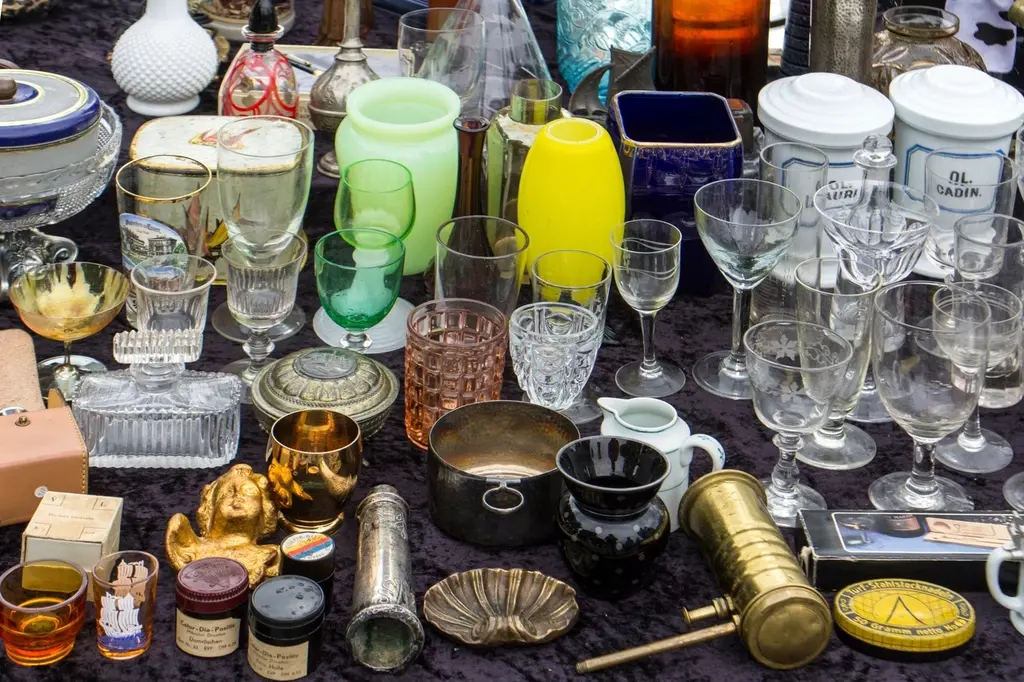
Old knobs are one of the easiest vintage hardware items to find, and you don't need matching sets for this project. In fact, variety makes it better. A quick guide to what you'll see:
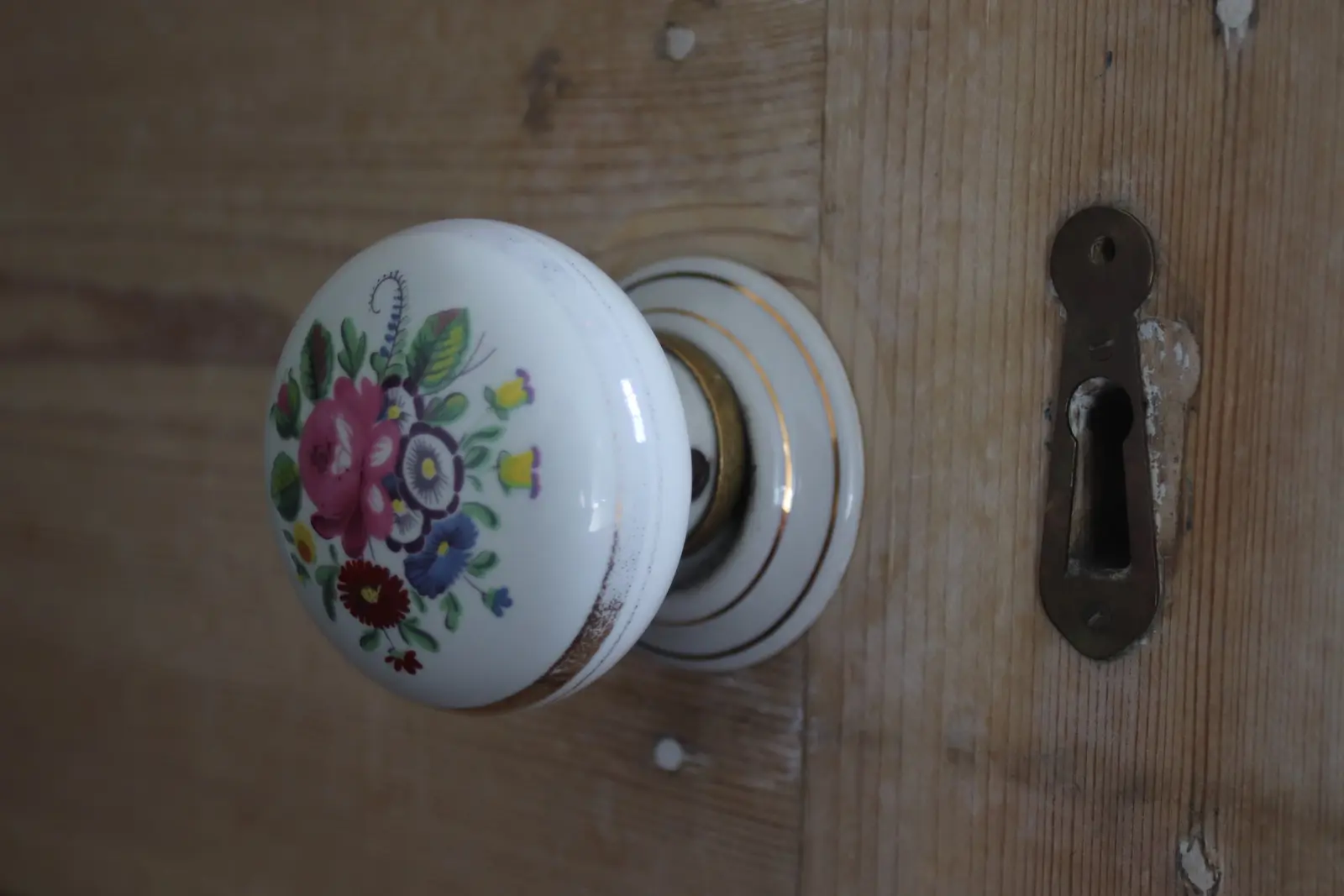
- Porcelain knobs. White, black, and brown "mineral" porcelain knobs were common in American homes by the late 1800s and early 1900s. White ones look like snowballs on the tree.
- Glass knobs. Clear and colored faceted glass knobs were especially popular from around the 1920s into the 1940s. Clear, amber, and the occasional pink or green glass knob add sparkle.
- Brass and bronze knobs. Decorative cast and stamped knobs from older homes bring warmth and pattern.
Architectural salvage yards, building reuse stores, and flea market hardware bins are the best sources. At estate sales, check junk drawers and garage shelves; knobs often hide in coffee cans and cigar boxes. Our estate sale tips and antique picking guide have more on where to dig. Prices typically range from a dollar or two for plain knobs to considerably more for colored glass or ornate brass, and condition drives value. Chipped or cloudy knobs are perfect for crafting and usually cheaper.
Building a Christmas Tree Made From Old Door Panels
An old five-panel or two-panel door makes a stunning base. You can use a whole door for a statement piece by an entry, or cut a single panel section free for a smaller tree. Another option is to cut the door itself into a tall triangle so the wood forms the tree and the knobs become the ornaments.
Old doors are heavy and often coated in old paint, so take a few precautions. Test the paint with a lead test swab before cutting or sanding, and if it tests positive, avoid making dust; leave the surface intact or choose another door. Pull every nail and hinge screw, and wear gloves when handling rusty hardware. Our guide on how to remove rust from vintage metal can help if your knobs or hinges need cleaning up.
Planning Your Door Knob Christmas Tree Layout
The layout is what makes a door knob Christmas tree read as a tree instead of a random scatter of hardware. Start by laying your board flat and drawing a tall, narrow triangle with a pencil or chalk line. A good rule of thumb is to make the triangle roughly twice as tall as it is wide at the bottom.
Next, arrange your knobs in rows inside the triangle: one knob at the peak, then two, then three, and so on down to the widest row. Space them at least 4 to 5 inches apart, center to center, so your hand fits between them if you plan to hang things. Set the knobs out on the board before drilling a single hole and step back to look at it from across the room. Move colors around until no two similar knobs sit right next to each other, and put the largest, sturdiest knobs on the bottom rows, where they'll do the most work.
Take a quick photo of the final arrangement with your phone. Once you start drilling, it's easy to forget which knob went where.
Design and Styling Ideas
- Snowy tree. Use mostly white porcelain knobs with a clear glass knob as the star.
- Sparkle tree. Choose all glass knobs and hang the piece near a window so sunlight hits the facets.
- Warm brass tree. Mix brass and bronze knobs on a dark stained board for a cozy, traditional look.
- Working coat rack. Keep the bottom row of knobs sturdy and well anchored so the tree can hold scarves, stockings, or a small wreath.
- Garland and greenery. Drape a strand of wooden beads or ribbon from knob to knob, or tuck sprigs of fresh cedar behind the board for fragrance.
Variations to Try
Short on knobs? Mix in vintage drawer pulls, cabinet knobs, or old spools. For a tabletop door knob Christmas tree, mount the knobs on a small triangular board cut from scrap wood and screw it to a block base. You can also skip the board entirely: thread knobs onto a sturdy metal rod in graduated sizes to make a stacked mini tree.
After the holidays, swap the star for a heart or a flag and keep the piece up as an entryway catchall year-round.
Care and Safety Notes
Glass knobs can chip, so handle them gently and keep the finished tree out of high-traffic spots where it might get bumped. Clean glass and porcelain with warm, soapy water and dry them well; brass can be left with its natural patina or lightly polished. Because knobs and old doors add up to real weight, always anchor the piece into wall studs or set it firmly on the floor leaned against a wall where it can't tip.
For more holiday ideas, see our barn wood Christmas trees or the DIY tinsel tree.
Frequently asked questions
How do you attach old door knobs to a board?
The simplest method is to glue short wooden dowels into holes in the board, then slide each knob's shank over a dowel with a little epoxy. Tighten the knob's set screw if it has one. Let the epoxy cure overnight before hanging.
What kind of door knobs work best for a door knob Christmas tree?
Any mix works, but glass knobs add sparkle, white porcelain looks snowy, and brass adds warmth. Mismatched knobs often look best. Chipped knobs are fine and usually cheaper.
Can I make a Christmas tree made from an old door?
Yes. You can mount knobs onto a whole door or panel, or cut the door into a tall triangle. Test old paint for lead before cutting or sanding, and remove all nails and hardware first.
How heavy is a door knob tree?
It can be surprisingly heavy, especially with porcelain or brass knobs on an old solid door. Hang it with hardware rated for the weight and anchor into wall studs, or lean it securely on the floor.