Vintage Jello Mold Pumpkin DIY: Easy Fall Decor
Flip a fluted vintage gelatin mold upside down and its ridges look just like a pumpkin. Add a stem and you're done.
If you've ever picked up an old fluted gelatin mold at a thrift store and thought it looked a little like a pumpkin, you're right. Turn it upside down and those curved ridges look just like pumpkin sections. A jello mold pumpkin is one of the easiest fall projects we know: no cutting, very little glue, and in many cases no paint at all.
It's also a sweet nod to mid-century kitchens. Molded gelatin salads and desserts were a fixture of American potlucks and holiday tables for decades, and plenty of those molds are still sitting in cupboards and thrift-store bins waiting for a second act.
What you'll need
Tap to check items off as you gather them.
How to make it
Wash and dry the mold
Clean the mold in warm, soapy water with a soft cloth and dry it completely so water spots don't form.
Flip it over
Turn the mold upside down so the fluted ridges face up. This is your pumpkin.
Fit the stem
For a ring mold, wedge a spool or cork into the center hole and glue a cinnamon stick or twig into it. For a solid mold, glue the stem to the top center.
Paint if you like
Leave the metal as is, or prime and paint it in light coats. A touch of metallic wax on the ridges highlights the flutes.
Add a leaf and tendril
Glue a faux or dried leaf beside the stem and twist a wire curl around its base.
Group and display
Arrange several molds of different sizes together, or stack a small mold on a larger one for a tall pumpkin.
A Little Jello Mold History
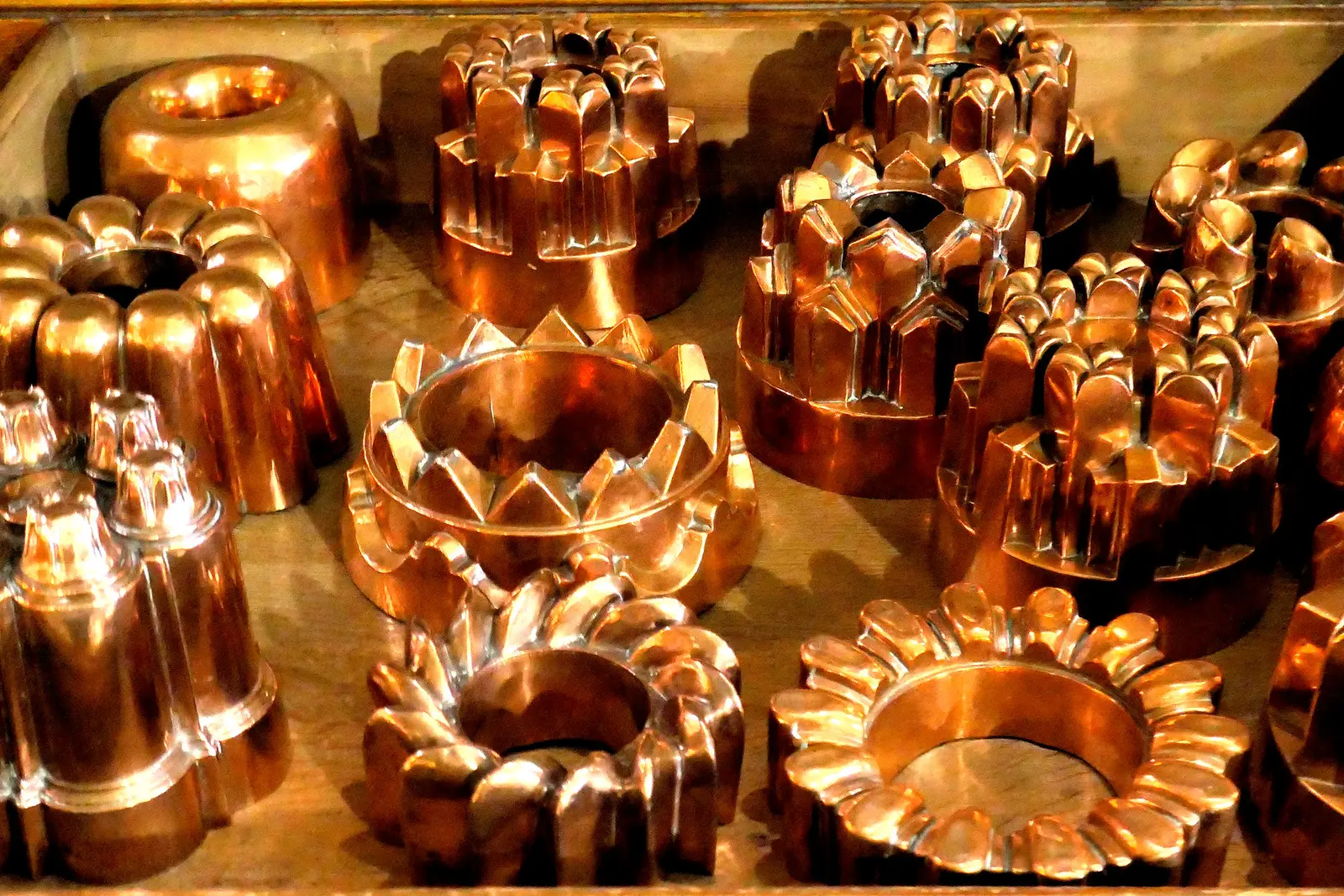
Gelatin desserts go back well before the 1900s, but boxed flavored gelatin made them easy for home cooks around the turn of the 20th century, and molded salads reached a peak of popularity in the mid-1900s. Home cooks collected molds in all sorts of shapes, from simple rings and fluted domes to fish, stars, and hearts. Many were made of lightweight aluminum, and copper-colored molds became a popular kitchen wall decoration, especially in the 1960s and 1970s.
Because so many were made, most vintage molds are very affordable. Plain aluminum molds are typically priced at a few dollars, while solid copper, tin-lined antique molds, or unusual shapes can cost much more. Condition, maker, and material all affect value.
Finding the Right Mold for Your Jello Mold Pumpkin
The best molds for pumpkins have deep, rounded flutes. Here's what to look for:
- Fluted ring molds. Bundt-style rings with a center hole are perfect, because the hole holds the stem.
- Fluted dome molds. Solid domed molds look like squat pumpkins; just glue the stem on top.
- Mini molds. Individual-size molds make tiny pumpkins for place settings or a tiered tray.
- Copper-tone molds. Their warm color looks like a harvest pumpkin with no paint needed.
Thrift stores, church sales, and estate sales are great sources; molds often come in kitchen box lots. Our estate sale tips explain how to dig through those. If you're out picking, check our antique picking tips too.
Painting and Finishing Ideas
One of the best things about this project is that many molds don't need paint at all. Copper-tone molds already look like autumn. But if your mold is plain aluminum, try one of these:
- Soft heirloom colors. Cream, sage, and pale blue-gray look like heirloom pumpkins and pair well with farmhouse decor.
- Classic orange. Use a spray primer made for metal before painting so it sticks to slick aluminum.
- Metallic highlights. After painting, rub a little gold or copper wax on just the ridges to make the flutes pop.
- Leave it silver. A shiny aluminum pumpkin next to white pumpkins and eucalyptus looks crisp and modern.
One important note: once a mold is painted or glued, it should be decor only. Don't use it for food again.
Styling Your Jello Mold Pumpkins
We like these grouped in threes or fives, mixing sizes and finishes. A large copper ring mold with a smaller aluminum mold beside it and a mini mold on a stack of cookbooks makes a charming kitchen vignette. Tuck a few into an open shelf with old cake stands, canisters, and a vintage cutting board for a cozy fall kitchen look.
They also make great table decorations for Thanksgiving. Put a mini mold pumpkin at each place setting with a name tag tied to the stem, or run a line of them down the center of the table on a burlap runner. Pair them with our funnel pumpkin for a whole patch of kitchen-inspired pumpkins.
For color, think about the rest of the room. Copper-tone molds glow next to warm wood, brass, and rust-colored linens. Silver aluminum molds look fresh against white ironstone, green velvet pumpkins, and eucalyptus. Painted molds let you match any palette, and a mix of finishes in the same family, like cream, sage, and soft blue, looks pulled together without being too matchy.
The stem is where you can add a little personality. Cinnamon sticks bring a cozy scent, real pumpkin stems saved from last year look the most natural, and a twist of brown paper or a wooden spool feels crafty and fun. Tie a bit of raffia or seam binding around the base for a finishing touch.
Variations to Try
Stack two fluted molds, a larger one on the bottom and a smaller one on top, to create a tall, two-tier pumpkin. Fill the center hole of a ring mold with a small battery-powered LED candle instead of a stem for a glowing centerpiece. Or set a ring mold right-side up and fill it with moss, mini gourds, and acorns for a little harvest wreath on the table.
After fall, the same molds can become wreaths, candle holders, or even holiday ornaments with a little ribbon.
Care and Storage
Unpainted molds can be wiped clean with a damp cloth. If you want to undo the project, museum putty or a low-temperature glue will release more easily than strong epoxy. Store your pumpkins nested together with tissue between them to prevent scratches, and keep stems in a separate small box so they don't break. Avoid using any open-flame candles inside or near molds decorated with dry leaves and cinnamon sticks.
Frequently asked questions
What kind of mold works best for a jello mold pumpkin?
Fluted ring molds and fluted domed molds work best, because their ridges look like pumpkin sections. Ring molds have a center hole that's handy for holding the stem.
Can I still use a jello mold for food after decorating it?
Not if you painted or glued it. Once a mold has been painted, sealed, or glued, keep it for decor only.
How can I tell if a jello mold is real copper?
Real copper is noticeably heavy for its size and many antique pieces have a tin lining inside. Lightweight copper-colored molds are usually aluminum. Hold onto heavy, tin-lined antique molds as collectibles.
What can I use for the pumpkin stem?
A cinnamon stick, a short twig, a wooden dowel, or a wine cork all work. Wrap a curl of floral wire around the base for a vine.