How to Spot Reproduction Antiques: A Practical Field Guide
Wear in the wrong places, too-perfect paint and modern screws give fakes away. Here's how to check before you pay antique prices.
Reproductions are everywhere: in antique malls, at flea markets, online and even at estate sales. Many are sold honestly as decor, and there's nothing wrong with owning one. The problem comes when a new piece is passed off as old and priced like it. Learning how to spot reproduction antiques protects your wallet and makes you a sharper picker, and the good news is that most fakes give themselves away if you know where to look.
There's no single test that works on everything. Instead, experienced collectors stack up clues: how a piece was made, how it has worn, what it weighs, how it's marked and whether all of those details agree with the age it claims. Here's how to do the same.
The Big Picture: Does the Story Add Up?
An authentic old piece has lived a life, and that life leaves consistent evidence. A reproduction usually tries to fake that evidence, and fakes tend to get the details wrong. Ask yourself:
- Is the wear where hands and feet would have touched it? Real wear shows up on drawer pulls, chair arms, the front edge of a tabletop, the bottom of a tin and the rim of a crock. Reproductions are often "distressed" evenly all over, or in places that wouldn't get worn.
- Is it too perfect? Crisp paint, bright color and sharp edges on something supposedly a century old are a warning sign, unless there's a clear explanation like unused old stock.
- Does the price make sense? A rare item priced like a common one deserves extra scrutiny.
- Are there lots of identical ones? If a booth has six of the same "antique" sign or cast iron bank, they're almost certainly new.
How to Spot Reproduction Antiques in Furniture
Furniture gives you lots to examine. Pull out drawers, flip over chairs (carefully) and look at the parts nobody bothered to finish.
Construction clues
- Dovetails: Hand-cut dovetails, common on older furniture, tend to be slightly irregular, with fewer, narrower pins. Very uniform, evenly spaced dovetails usually point to machine work, which became common in the late 1800s and later.
- Saw marks: Straight, uneven saw marks suggest hand or early mill sawing. Curved, regular arc marks come from circular saws, which became widespread in the 1800s. Those arcs aren't proof of a fake, but they matter if a seller claims a very early date.
- Screws and nails: Old screws typically have off-center slots and uneven threads. Phillips-head screws weren't common in furniture until roughly the 1930s and later. Of course, a modern screw can be a later repair, so look for consistency throughout the piece.
- Materials: Plywood, particleboard and staples in primary construction point to later manufacture.
Age clues
- Oxidation: Unfinished wood on drawer bottoms and backs darkens with age. Fresh, pale wood under an "aged" finish is suspicious. So is a dark stain applied to make it look old, which can look flat and uniform.
- Shrinkage: Wood shrinks across the grain over many decades, so old round tabletops often measure slightly less across the grain than with it.
- Hardware ghosts: Extra holes or outlines where earlier pulls were attached are common on older pieces. Their absence isn't proof, but they're a reassuring sign.
Glass and Jars
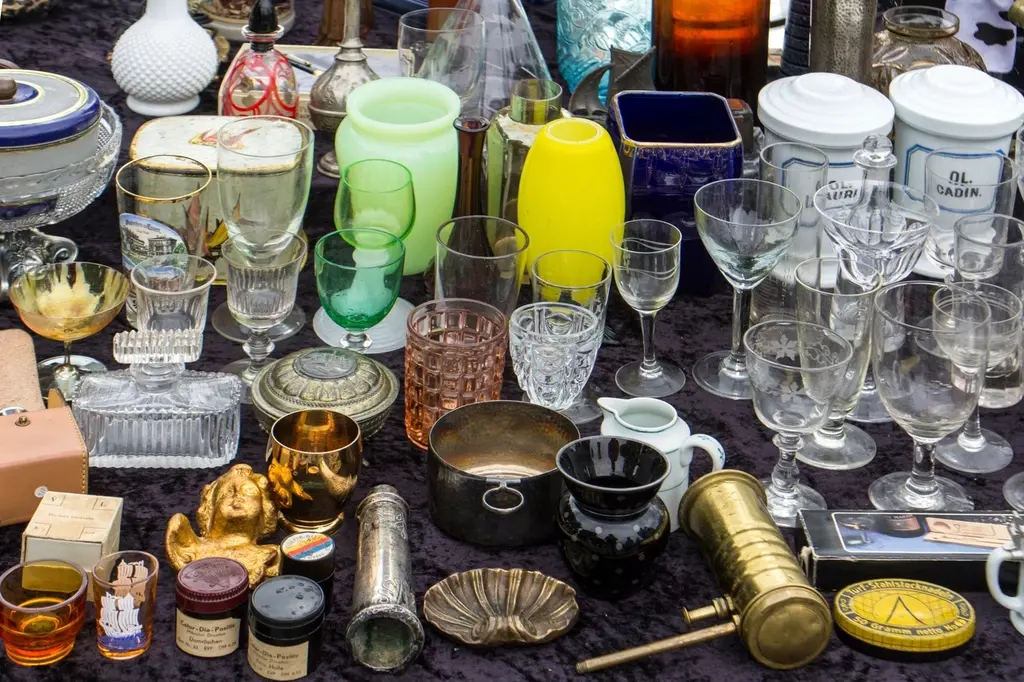
Glass is one of the most reproduced categories, especially Depression glass, pressed glass and fruit jars.
- Weight and feel: Some reproductions are noticeably heavier or thicker than originals. Others feel slick and lack the subtle irregularities of older glass.
- Color: Reproductions often come in colors the original pattern was never made in, or in shades that are slightly off. Learn the authentic colors for anything you collect.
- Detail: Molds wear and are recopied, so repro patterns often look softer or blurrier than originals.
- Wear on the base: Old glass that sat on shelves for decades usually shows fine scratches on the foot ring. A pristine base on a supposedly old piece deserves a second look, though artificial scratching exists too.
- Jars: Ball and other jar makers have released colored commemorative and heritage-style jars, and decorative jars are made to look old. Our guide on how to date Ball Mason jars explains which logo styles fit which eras, and the Ball jar age finder helps you check a jar on the spot.
Tins, Signs and Advertising
Advertising pieces are heavily reproduced because the graphics are so popular.
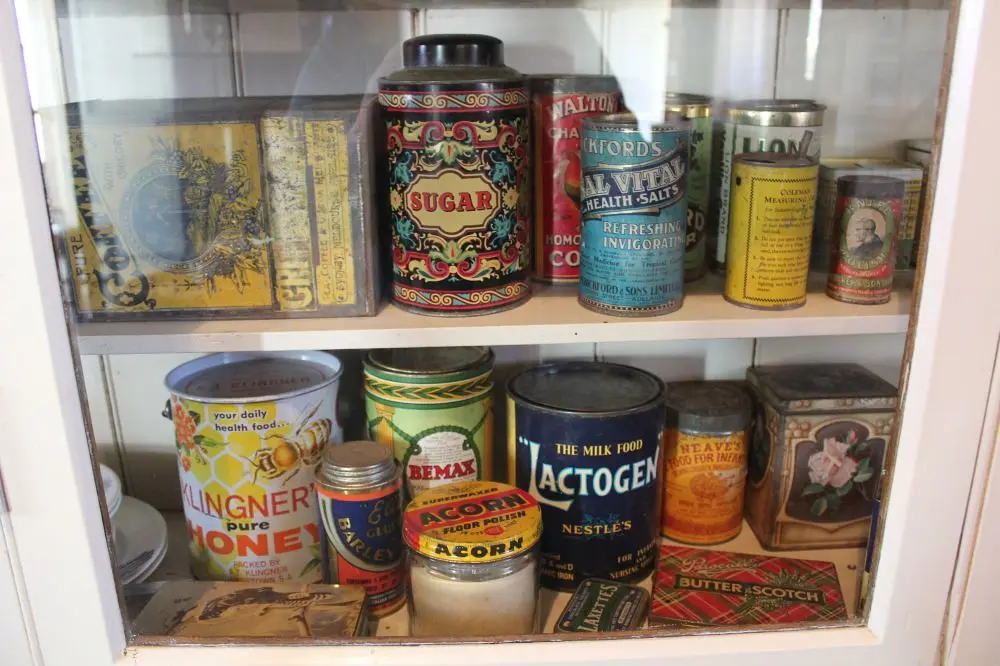
- Lithography: Old lithographed tins typically have fine detail and gentle, honest wear from handling. New tins often have overly bright, flat color and a modern sheen.
- Artificial aging: Fake rust or "patina" printed into the design, or applied evenly over the whole surface, is a giveaway. Real rust starts at edges, seams and scratches.
- Construction: Many reproductions use thinner metal, modern seams or rolled edges that differ from the originals.
- Porcelain signs: Originals were built up in layers of enamel, so chips often show visible steps in the color layers. Reproductions may be single-layer, unusually light, or have chips that look too uniform, as if made on purpose.
If you collect tobacco tins in particular, our vintage tobacco tin value guide covers what original condition should look like.
Cast Iron, Brass and Other Metals
- Casting quality: Original cast iron toys, banks and doorstops often have smooth surfaces and parts that fit closely. Reproductions made by casting from an original tend to be rougher and slightly smaller, with gaps where parts meet.
- Paint: Old paint wears through to the metal at high points. New paint that's been sanded to look worn often shows sanding marks or wears in odd spots.
- Brass and bronze: A magnet won't stick to solid brass or bronze. If it sticks, the piece is plated steel or iron. That doesn't make it a fake, but it matters if it's sold as solid brass.
- Hardware: Modern Phillips screws or hex bolts holding together "antique" metal pieces are a clue to check further.
Pottery, Stoneware and China
- Marks: Fake or "fantasy" marks are common. Compare any mark to reliable references, and be suspicious of marks that look stamped on crooked, blurry or too new.
- Crazing: The fine network of cracks in glaze happens naturally over time, but it can also be induced. Crazing that appears evenly everywhere with no grime in the cracks may be artificial.
- Weight and clay: Look at the unglazed foot. Old stoneware often shows clay that has darkened with age and handling, while new pieces look clean and bright.
- Removed labels: Glue residue or a scuffed spot on the base can be a sign a modern country-of-origin sticker was peeled off.
Tools That Help in the Field
- A small magnifying loupe for marks, printing detail and tool marks
- A pocket flashlight and a small UV light
- A magnet for testing brass and other metals
- A tape measure, since many reproductions differ slightly in size from originals
- Your phone, for comparing against photos of known authentic examples
Buying Smart
The best protection is knowledge plus a good seller. Learn one category deeply rather than everything a little. Handle authentic pieces whenever you can, at reputable antique shops, museums or collector shows, so your hands and eyes know what "right" feels like. Ask sellers what they know about a piece's age and history, and pay attention to how they answer. Reputable dealers will tell you when something is a reproduction or a later piece.
Finally, remember that a reproduction isn't a bad thing when it's priced and sold as what it is. Plenty of reproduction pieces look wonderful in a farmhouse kitchen or on a porch. The goal is simply to pay a fair price for what you're actually getting. For more on hunting with a sharp eye, see our estate sale tips and our antique picking tips.
Frequently asked questions
What is the easiest way to tell if an antique is a reproduction?
Look at where it's worn. Real wear appears where hands, feet and use would naturally touch a piece, while reproductions are often distressed evenly or in odd places. Then check construction, weight and markings to see if everything agrees with the claimed age.
How can I tell if furniture is antique or a reproduction?
Pull out drawers and look underneath. Hand-cut dovetails, irregular old screws, darkened unfinished wood and signs of shrinkage point to age. Uniform machine dovetails, Phillips screws throughout, plywood and fresh pale wood suggest later manufacture.
Does a UV light detect fake antiques?
A UV light can be a helpful clue, especially for spotting repairs and comparing glass to a known original, but it isn't a definitive test. Use it alongside other checks like wear, weight, construction and markings.
Are reproduction antiques worth anything?
Reproductions can be attractive decor and are worth buying at decor prices. They typically don't hold value the way authentic antiques do, so the key is paying a fair price for what the piece actually is.
How do I avoid buying fakes online?
Ask for detailed photos of marks, bases, backs and wear areas, read descriptions carefully for words like 'style' or 'reproduction', and buy higher-value pieces from sellers with strong reputations and clear return policies.